

The tech landscape has fundamentally fractured.
While the public argues over AI chatbots, hyperscalers are quietly buying up power plants, global supply chains are hemorrhaging trade secrets, and central banks are preparing for algorithm-induced meltdowns. We track these massive macro-shifts so you can engineer your enterprise infrastructure for true market dominance.
Here is what you need to know this week.
1. FERC Orders Government-Mandated Grid Fast-Lane for AI Data Centers
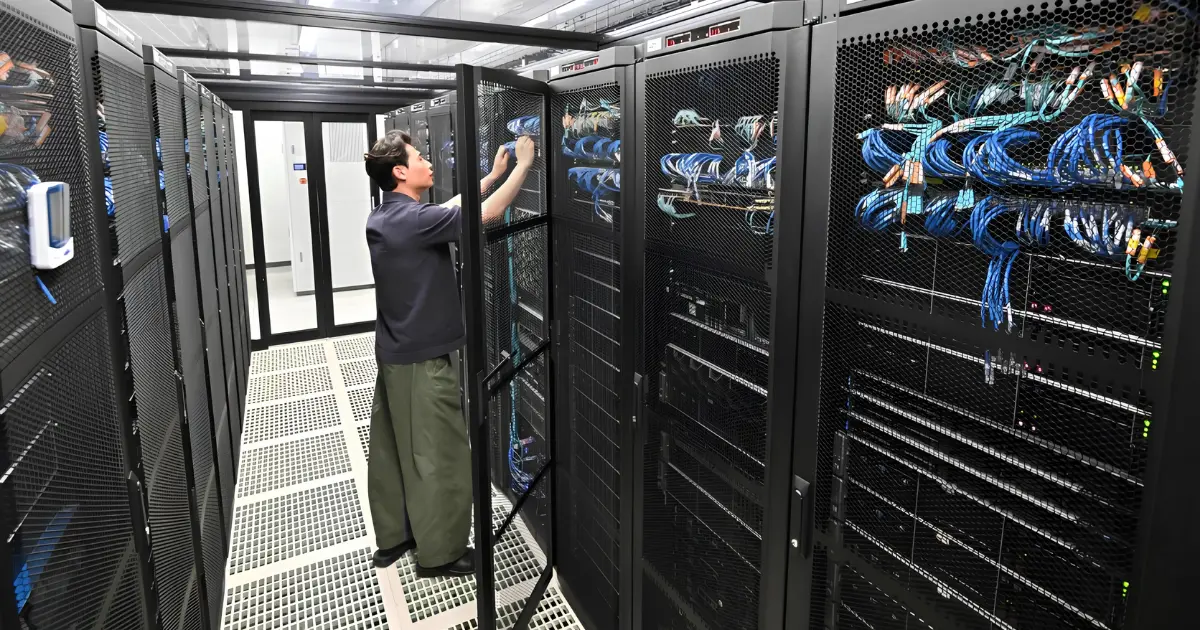
Image courtesy of Tech Times
The infrastructure bottleneck for artificial intelligence development has reached the federal level, prompting the Federal Energy Regulatory Commission (FERC) to order regional grid operators to fast-track transmission connections specifically for data centers. This unprecedented directive allows enterprise compute infrastructure to bypass traditional, heavily congested utility queues, provided these facilities fund their own alternative transmission technologies.
The Impact: This federal intervention officially solidifies data centers as vital national infrastructure rather than standard commercial real estate, radically altering the landscape for enterprise software architecture. However, speeding up transmission lines does not magically create more electricity on the grid. To scale custom software solutions and high-demand compute effectively, enterprise tech leaders are being forced to aggressively secure independent power generation to ensure their operations remain online and uninterrupted.
2. Microsoft and Chevron Launch Historic 2.67GW Off-Grid Gas Project

Image courtesy of CNBC and Chevron
In a monumental shift for AI infrastructure, Big Tech is officially bypassing the public utility grid entirely. Microsoft and Chevron have signed a 20-year agreement to construct a co-located, 2.67-gigawatt natural gas facility in West Texas. This massive off-grid foundry will run directly off local Permian Basin production to power next-generation AI clusters, creating a fully isolated and sovereign computing ecosystem.
The Impact: This historic partnership proves that hyperscalers are completely separating themselves from legacy public utility timelines to maintain their edge in rapid software development and deployment. For forward-thinking enterprises, it signals that the race for artificial intelligence dominance has officially devolved into a raw race for energy acreage. Securing dedicated, off-grid energy resources is now just as critical as the software engineering itself.
3. Tata Electronics Breach Exposes Apple & Tesla Supply Chain Risks
Image courtesy of The Mobile Times
Globalized hardware supply chains are facing a severe security reckoning as enterprise cybersecurity vulnerabilities take center stage. Indian manufacturing giant Tata Electronics confirmed a catastrophic cybersecurity incident, resulting in over 630 gigabytes of stolen data being exposed online. The massive cache of leaked files reportedly includes sensitive proprietary spec sheets, factory data, and stringent quality standards belonging to industry giants like Apple and Tesla.
The Impact: This high-profile breach exposes the extreme operational vulnerability of relying on third-party contract manufacturers within a highly interconnected global supply chain. It serves as a stark, urgent reminder that enterprise designs and proprietary software architectures are only as secure as the weakest intermediary handling their physical components. Modern software development agencies must help clients enforce rigorous data security protocols from the initial design phase all the way through to final assembly.
4. ECB Warns AI Concentration Could Trigger Global Financial Crises

Image courtesy of Corporate Finance Institute
The systemic risk of concentrated artificial intelligence has officially caught the attention of global banking regulators and financial institutions. The European Central Bank (ECB) has issued a stark warning that enterprise reliance on a small handful of dominant AI models could trigger systemic financial meltdowns. In response, the central bank is urgently calling for strict operational governance to regulate automated risk management systems that operate via a single model monoculture.
The Impact: This severe warning shifts the AI conversation completely away from internal operational efficiency and firmly frames it as a major macro-systemic enterprise risk. Elite software architects must intentionally design multi-model redundancies and diverse logic into their enterprise software development pipelines to prevent localized software failures from cascading into broad institutional liabilities.
The Macro Takeaway: The Era of Sovereign Systems

The enterprise landscape has fundamentally shifted, requiring businesses to move away from simply deploying agile software features to actively managing intense physical constraints and institutional sovereignty. When oil majors build private power plants and central banks warn of model-driven economic collapses, the tech conversation sheds all lightness. Winning the modern enterprise market requires treating compute as an active physical risk factor. True technological maturity now means moving away from shared public networks and transitioning to localized, highly secure, and self-powered systems architectures.
The Public Grid is Full. Secure Your Sovereignty.
From navigating the newest API surcharges to mastering AI-driven productivity tools, we help you scale with integrity. Stop relying on artificial shortcuts and start building highly resilient software architectures.